
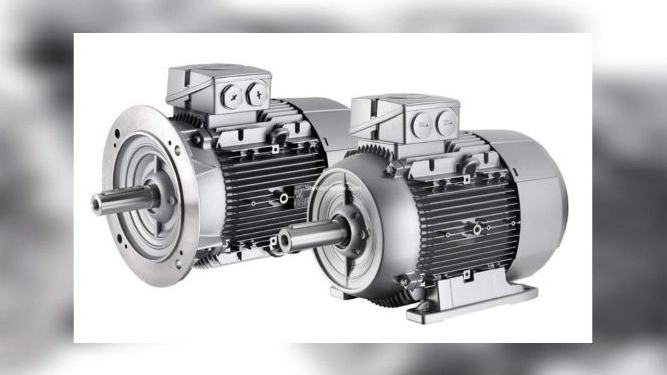
In the world of mechanical engineering and electrical industry, choosing the right electric motor is one of the most critical decisions that directly affects the efficiency, lifetime of the device and final costs. One of the most common questions that engineers and technicians face is whether a 1400-rpm electric motor or a 3000-rpm electric motor is better for a specific application. The answer to this question is not a simple word and requires a detailed examination of technical parameters, type of load, required torque and environmental conditions. In this article, we will do a specialized review of these two types of engines so that you can make the best choice with complete knowledge.
Technical and structural differences between the electric motor of 1400 revolutions and 3000 revolutions
To better understand the differences between these two engines, we must first look at the basic principles of their operation. Both motors are usually three-phase AC induction type, but the main difference lies in the design of the rotor and stator poles. The 3000 rpm electric motor, which is called a bipolar motor, has a synchronous speed of 3000 rpm, which decreases to about 2900 rpm in the real load. On the other hand, the 1400 rpm electric motor or four-pole motor has a synchronous speed of 1400 rpm, which reaches about 1400 to 1450 rpm under load.
One of the most important technical differences is torque. According to the power formula (P = T × ω), at the same power, a motor with a lower speed produces more torque. Therefore, 1400 rpm electric motor has a much higher initial torque and nominal torque than its 3000 rpm counterpart. This feature makes 1400 rpm engines very suitable for starting heavy loads and high inertia. While the 3000 rpm electric motor has less torque due to its high speed and is not suitable for starting heavy loads without using a gearbox or inverter.
Examining the uses, advantages and disadvantages of each engine
Choosing between 1400 rpm electric motor and 3000 rpm electric motor completely depends on your application. In this section, we will examine the uses of each and their advantages and disadvantages so that you have a clearer picture of the correct choice.
Applications and benefits of 1400 rpm electric motor
The 1400 rpm electric motor is known as the workhorse of the industry. Stability, high torque and strength are prominent features of this engine. These engines perform best in applications that require high traction force and medium speed.
One of the main advantages of the 1400 rpm electric motor is low vibration, long life, easy maintenance, and less depreciation. Also, these motors show more acceptable performance than 3000 rpm motors in electrical networks that have voltage drop.
Applications and benefits of 3000 rpm electric motor
The 3000 rpm electric motor shines when the main goal is high speed in small dimensions. These engines have a smaller physical size and less weight than the 1400 RPM engines.
The main advantage of 3000 rpm electric motor is high speed and small volume. If you need a motor with a high rotation speed in a limited space, this motor is the right choice. However, its disadvantages should also be noted. More vibration and noise, less torque and faster wear of bearings are among the disadvantages of these engines. Also, if you need high torque, you must use a gearbox, which increases the cost and complexity of the system.
Final comparison and how to choose
For the final choice, you need to weigh various parameters. If your priority is power and torque, and speed is of secondary importance to you, 1400 rpm electric motor is the winner. But if you need high speed and your load is light, 3000 rpm electric motor will be a better choice.
Also don't forget that maintenance costs are usually lower on 1400 rpm engines. In the oil and gas and petrochemical industries, where equipment downtime is costly, 1400-rpm engines are preferred due to their greater stability. For expert advice and to see the list of prices and various models, it is recommended to visit the site https://pmelecteromotor.com/ so that you can find a product Choose according to your needs.
Finally, both types of engines have their own uses and it is impossible to say absolutely that one is better than the other. Knowing the exact needs of the project and consulting with experts is the key to making the right choice. We hope this article has helped you understand the differences between these two engines.
